

Running Google Ads sounds simple in the beginning.
You create campaigns, choose keywords, set a budget, and launch. Compared to other platforms, it can feel more structured early on.
But once campaigns start scaling, things usually become more complicated.
Some advertisers run into verification issues. Others hit account limits or sudden performance drops that do not always make sense. There are also situations where campaigns slow down even though nothing major changed.
That is usually the point where people begin looking into different account setups.
And lately, more advertisers have been moving toward Google agency ad accounts. Not because they are trying to “hack” the system, but because they want something that feels more stable long-term.
In this guide, we will break down how Google agency accounts work, why advertisers are switching, and what to look for before choosing a provider.
What Is a Google Agency Ad Account?
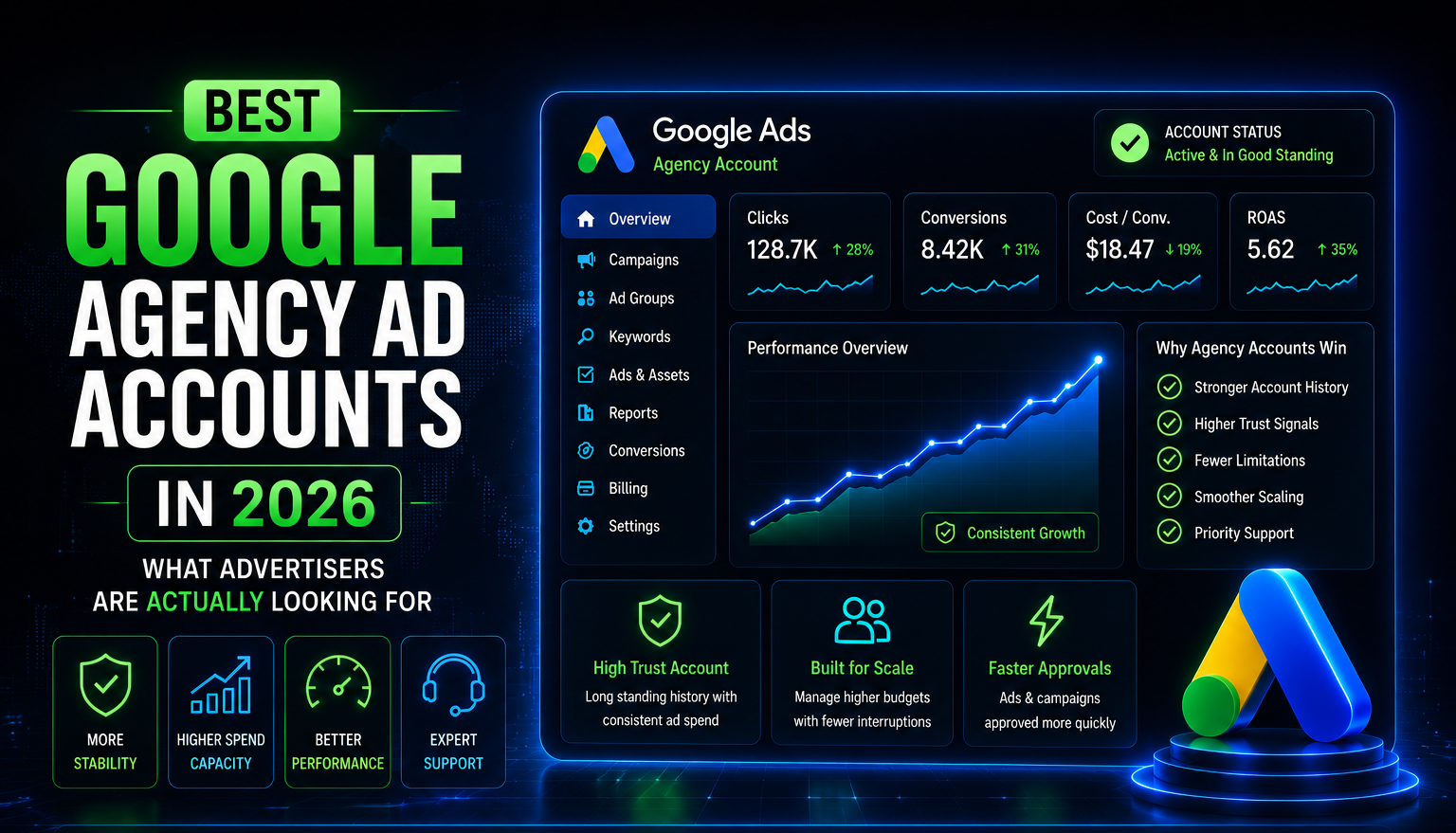
A Google agency ad account is an advertising account provided through a partner or agency setup rather than a standard self-created account.
Instead of starting completely from scratch, advertisers gain access to accounts that are already structured for ongoing campaign management and higher levels of spend.
For businesses running ads consistently, that difference can matter more than expected.
With regular accounts, newer setups sometimes run into:
- spending limitations
- verification delays
- inconsistent account reviews
- slower scaling
Agency accounts are usually designed to handle larger and more active campaigns over time.
That does not mean they remove all risk, but they often create a smoother environment for scaling.
Why More Advertisers Are Switching to Agency Accounts
A few years ago, most advertisers simply used standard Google Ads accounts and left it at that.
Now, the conversation is changing.
As businesses increase spend and rely more heavily on paid traffic, stability becomes more important.
People are not just looking for clicks anymore. They are looking for predictability.
Some common reasons advertisers start exploring agency accounts include:
- campaigns slowing down unexpectedly
- account verification issues
- spending caps
- inconsistent support experiences
- difficulty scaling budgets smoothly
For smaller campaigns, these things may not matter much. But once ads become part of your main growth strategy, interruptions become expensive.
That is why more businesses are starting to rethink the setup itself, not just the campaigns.
How Google Advertising Works at Scale
Google Ads works differently from most social platforms because search intent plays a major role.
A person is already looking for something. Your job is to appear at the right moment with the right message.
At first, the process feels straightforward:
- choose keywords
- write ads
- set bids
- launch campaigns
But scaling introduces a different layer of complexity.
As budgets increase, advertisers often notice changes in:
- campaign efficiency
- approval timelines
- account behavior
- cost consistency
That is when account structure starts to matter more.
A setup that worked for smaller campaigns does not always hold up the same way once spend increases.
What Advertisers Usually Want From a Better Setup
Interestingly, most advertisers are not looking for anything complicated.
They usually want the same few things:
- campaigns that run consistently
- fewer interruptions
- faster scaling
- support when issues happen
That is really the core of it.
A stable environment matters because it allows businesses to focus on improving performance instead of constantly reacting to account problems.
Common Problems With Standard Google Ad Accounts
This is where frustrations usually start showing up.
At first, campaigns run normally. Then over time, issues begin appearing more often.
Some of the most common ones include:
Verification Delays
Accounts sometimes get stuck in review processes longer than expected.
Spending Limits
Scaling becomes difficult because account limits slow growth.
Unexpected Performance Changes
Campaigns suddenly behave differently even though nothing major changed.
Support Challenges
Getting clear answers can take longer than advertisers expect.
None of these problems are unusual on their own. But together, they can make long-term scaling feel unpredictable.
Why Stability Matters More Than People Think
A lot of advertisers focus entirely on campaign strategy.
And while strategy matters, account stability plays a bigger role than most people realize.
If campaigns keep getting interrupted, it becomes harder to:
- test effectively
- scale budgets
- maintain consistent lead flow
- optimize performance over time
Even short disruptions can impact results when ads are a major acquisition channel.
That is why businesses spending consistently tend to prioritize stability much earlier than newer advertisers.
What to Look for in a Google Agency Account Provider
Not every provider operates the same way.
Before choosing one, it helps to pay attention to a few things that actually matter in practice.
Structured Onboarding
A smoother onboarding process usually means fewer issues later.
Support
Some setups are very hands-off. Others provide actual guidance and troubleshooting help.
Scalability
The account should support growth without constant friction.
Transparency
Pricing and setup expectations should be clear from the start.
A lot of advertisers focus only on access, but the structure around the account often matters just as much.
Why Many Advertisers End Up Using Ad Guardians
One option that continues to come up more often is Ad Guardians.
The reason is fairly simple. Advertisers are looking for a setup that feels more reliable as campaigns grow.
Instead of constantly dealing with account-related interruptions, the focus becomes scaling campaigns more consistently.
From what we have seen, Ad Guardians focuses on:
- agency account access built for scaling
- faster onboarding
- more stable campaign management
- support designed for ongoing advertisers
It is not about shortcuts. It is about creating a setup that feels more predictable over time.
If you want to explore how their Google agency account setup works, you can check their pricing and details here:
When It Makes Sense to Upgrade Your Setup
Not everyone needs an agency account immediately.
But there are some situations where it becomes more relevant:
- you are spending consistently every month
- scaling campaigns keeps becoming difficult
- account limitations are slowing growth
- interruptions are affecting performance
At that point, the account setup itself can become part of the bottleneck.
And when that happens, switching to a more stable structure usually makes sense.
The Goal Is Consistency, Not Constant Recovery
A lot of advertisers spend too much time reacting to problems.
Fixing restrictions. Adjusting limitations. Waiting for reviews.
Over time, that becomes exhausting.
What most businesses actually want is consistency.
They want campaigns that can keep running while the team focuses on optimization, creative testing, and growth.
That is usually where a stronger account setup makes the biggest difference.
Start Running Google Ads With a More Stable Setup
If you are tired of dealing with account limitations or unpredictable interruptions, it may be time to explore a more stable approach.
With Ad Guardians, businesses can run Google Ads through agency account setups designed for ongoing campaigns and smoother scaling.
Start your 7-day trial today and explore a more reliable way to run Google Ads:
Frequently Asked Questions
What is a Google agency ad account?
It is an advertising account provided through a partner or agency setup designed for ongoing campaign management and scaling.
Are agency accounts better for scaling Google Ads?
For many advertisers, yes. They are often better suited for higher spend and ongoing campaigns.
Can agency accounts still run into issues?
Yes, but they are generally built to provide a more stable environment for advertisers running consistent campaigns.
Who should use a Google agency account?
Usually businesses or advertisers who rely heavily on paid traffic and want fewer interruptions while scaling.
